
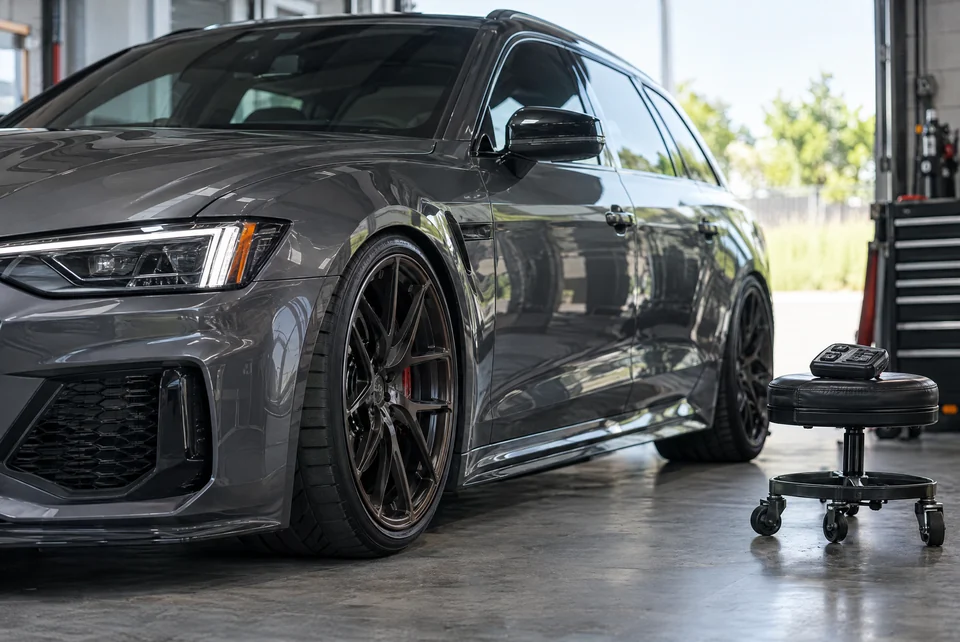
Air suspension adds a variable to vehicle transport: the height measured in the driveway may not remain the same during handling. The useful question is not simply how high the car can rise. It is which configuration the manufacturer permits for loading, securing and transport, and whether this particular system can maintain it.
What to know first
- Document the exact suspension system and any known height loss or faults.
- Keep loading height, transport settings and lifting instructions distinct.
- Have the carrier review manufacturer instructions and actual clearances before dispatch.
Identify the system before discussing settings.
Record the year, model and factory suspension equipment, or the brand and specification of an aftermarket installation. Include controller details and the installer’s contact if the car has been modified. A generic description such as “air ride” does not tell the provider how the system behaves.
For an aftermarket system, disclose changed control logic, manual valves and compressor or reservoir limitations. Modified vehicles require a manual quote. Supply the relevant operating information without asking the driver to discover unfamiliar controls during a timed pickup.
Record how the car behaves while parked.
Observe the vehicle in normal use and report known height loss, uneven corners, warning messages or a compressor that struggles. State how recently those symptoms were checked. Do not promise that a raised setting will hold through a journey simply because it remained stable for a few minutes.
If there is a fault, ask a qualified workshop to assess it before dispatch. The transporter needs the likely condition at unloading as well as pickup. A car that settles below its usable loading clearance may need a different plan or repair before it can be accepted.
Find the instructions for each handling stage.
Obtain the correct owner manual and any applicable transporter guidance. Separate instructions for moving the car, securing it and lifting or jacking it. A setting named for one purpose should not automatically be used for another.
Tesla’s Model X manual illustrates why this matters: it describes self-leveling even when the vehicle is powered off and requires Jack Mode for lifting or jacking. That is a model-specific instruction, not a universal air-suspension transport recipe. Have the provider follow the applicable instructions for your vehicle.
Measure the approved configurations.
Record the lowest front, rear and accessible underbody clearances in normal use and in any approved loading configuration. Include overall height, front overhang and photos showing the setup. Explain which corners rise and whether the setting depends on electrical power or other operating conditions.
Ask the provider to review the measurements against the proposed ramp or liftgate. Do not rely on a maximum-height figure as proof of compatibility. The approach, transition onto the deck and restraint access can each present a different clearance constraint.
Prepare a short handoff instruction sheet.
Write the vehicle identity, manual reference, agreed setup and responsible technical contact on a concise sheet. Identify which person will operate the controls at pickup. Confirm that person will be available for questions and that a copy reaches the receiving contact.
List any accepted removable controller, remote or key and record its handover. Avoid leaving a long sequence of unverified button presses as the only guidance. If the actual system does not respond as expected, pause loading and contact the responsible specialist rather than improvising.
Confirm the unloading and inspection plan.
Ask how the provider will handle the car if its height has changed before delivery. Resolve equipment compatibility and access with the destination contact. If the vehicle is going to a workshop, confirm that someone familiar with the suspension can attend.
Photograph ride height and existing bodywork marks at pickup. At delivery, compare condition and report new concerns through the agreed process. Restore normal operation only as the manufacturer or qualified installer directs. The completed plan should identify who makes that change and when the car is ready to drive.
Plan your next step
Discuss the vehicle and loading requirements ↗Request a transport quote ↗Sources & further reading
Explore the service
Custom & specialty vehicle transport ↗Published by Driveline Logistics. Guides explain planning considerations; shipment-specific equipment, availability and written terms are confirmed before booking.