
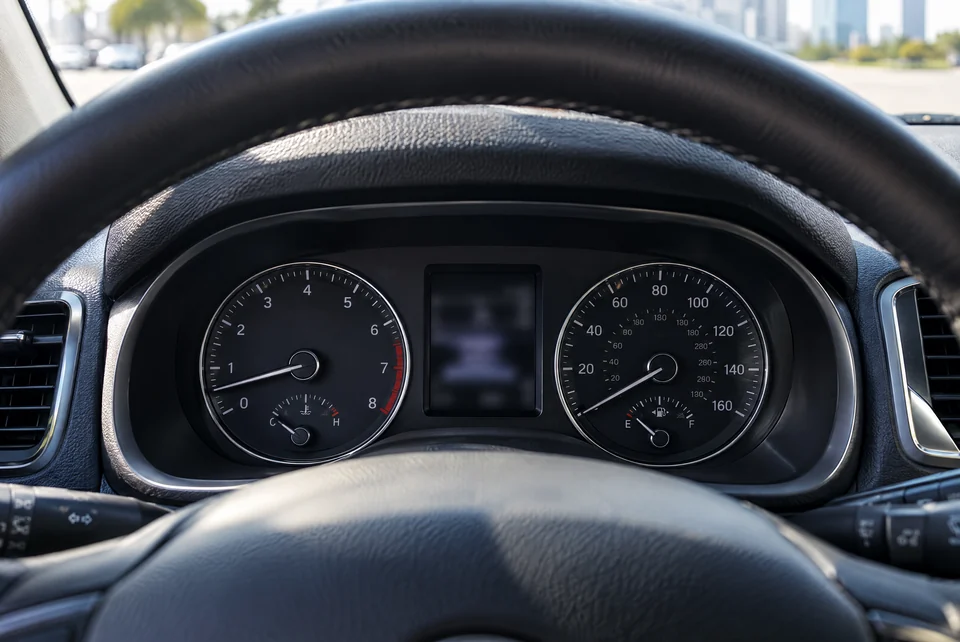
Transporting a car avoids driving it along the shipment route, but the vehicle may still be moved to a loading point, onto a trailer or around a receiving lot. Odometer records help make those movements understandable. Photograph the actual mileage display at each handoff, establish which local movements are authorized and compare like-for-like readings before drawing a conclusion about a difference.
What to know first
- Record the total odometer and its units at pickup and delivery.
- Agree on any driving between the address, loading point and final parking space.
- Investigate an unexplained difference using handoff records, not a generic mileage allowance.
Record the total odometer, not a trip counter.
Find the vehicle’s total mileage display before the pickup contact arrives. Digital clusters may cycle through trip distance, estimated range, service intervals and the odometer. Consult the owner’s manual if the display is unfamiliar. Photograph a wider dashboard view as well as a readable close-up.
Note whether the units are miles or kilometers and whether the displayed figure includes decimals. A unit change can make two numbers look inconsistent. Do not reset trip counters or alter settings as a substitute for recording the total odometer accurately.
Define the starting point of the record.
A photograph taken in your driveway the night before pickup may precede a drive to a meeting area. Write down when and where each reading was captured, and take a fresh reading at the actual release. This separates your own travel from movement after custody changes.
For a dealership or repair-shop pickup, ask whether staff will reposition or test the car before release. Keep their explanation with the pickup record. If the car cannot display its odometer because of a battery or instrument problem, describe that limitation instead of estimating a number.
Agree on movements outside the trailer.
Discuss who brings the car to any alternate loading area and who moves it from unloading to the final parking space. If you authorize a representative to drive that portion, confirm the route and responsibility separately. A nearby meeting point can still require a measurable drive.
Ask whether any intermediate facility or transfer is proposed and how vehicle movements there are documented. Do not assume every additional mile is explained by loading, or that every shipment should show an identical increase. There is no universal acceptable mileage figure that replaces the actual arrangement.
Capture the receiving reading before driving away.
Ask the receiver to photograph the odometer immediately after unloading, before the trip home or to storage. Compare it with the pickup reading using the same units. Check the vehicle reference so records from similar inventory units are not mixed together.
Record any later movement by the receiver separately. If several people handle the car, a simple sequence of time, location, reading and person is more useful than a single number sent days afterward. Keep the signed handoff documents with that sequence.
Investigate a difference without jumping ahead.
If the reading is unexpected, first rule out a trip counter, unit mismatch, blurred digit or earlier photograph. Then ask the coordinator and the relevant handoff contacts for the movement history. Describe the precise readings and documents rather than making an unsupported accusation.
NHTSA recommends comparing an odometer with title and maintenance records when checking a used vehicle’s history. Those broader checks can help if your concern predates shipment. They serve a different purpose from comparing pickup and delivery records for this particular transport.
Keep mileage evidence in perspective.
The odometer does not describe every aspect of condition or handling. Pair it with exterior photos, the pickup report and delivery inspection. If you use connected-car records, retain the relevant entries, but allow for missing signals, delayed updates or ambiguous events before relying on them.
- Was the first reading taken before or after the drive to the meeting point?
- Are both photographs showing total mileage in the same units?
- Did the dealership or receiver move the vehicle outside the carrier handoff?
- Can each unexplained interval be tied to a named custodian and location?
Plan your next step
Explore open vehicle transport ↗Discuss your handoff instructions ↗Sources & further reading
Explore the service
Open car transport ↗Published by Driveline Logistics. Guides explain planning considerations; shipment-specific equipment, availability and written terms are confirmed before booking.