
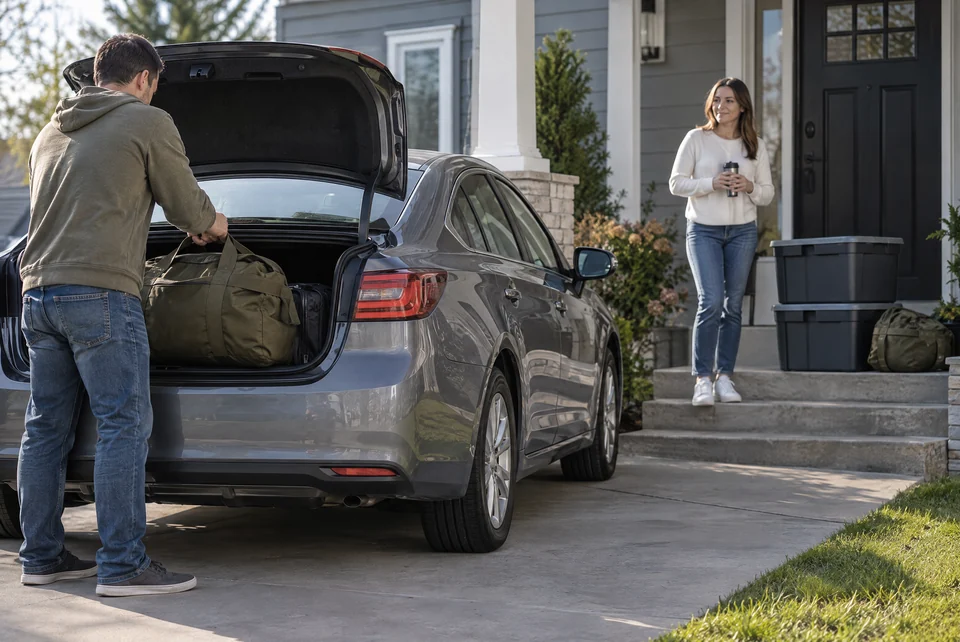
A permanent change of station can create several different vehicle tasks: driving one car, privately shipping another, or connecting to an authorized government shipment. Treat these as separate decisions. Your orders and transportation office determine applicable entitlements; a civilian transport quote cannot establish reimbursement. Build the privately arranged portion around confirmed military instructions and the people available to release and receive the vehicle.
What to know first
- Ask the transportation office about your specific orders before committing to private shipping.
- Keep government vehicle processing appointments separate from civilian carrier arrangements.
- Arrange authorized contacts and temporary transportation around the report date.
Establish what your orders actually support.
Contact the transportation office with your orders, origin, destination and number of vehicles. Ask which movement, if any, is authorized at government expense and whether you need approval before making a private arrangement. Record who answered, the date and any written guidance they provide.
Military OneSource explains that CONUS vehicle shipping is largely the member’s responsibility, with exceptions to discuss with the transportation office. It also describes government POV provisions for qualifying OCONUS moves. Neither statement is a personal entitlement decision. Avoid assuming a second vehicle or a convenient private shipment will be reimbursed.
Draw the boundary around the civilian job.
Define exactly where the private carrier’s responsibility starts and ends. The request might be a home-to-home move or a road leg connecting to a vehicle processing center. Confirm whether that center accepts third-party tender or collection, what authorization it requires, and who holds the appointment.
Military OneSource directs members to PCSmyPOV for processing-center appointments and documentation. Review the actual location’s instructions before assigning a truck. A general delivery window cannot substitute for an accepted appointment, and a civilian coordinator should not be presumed to control the government shipment.
Plan backward from reporting and travel.
Write your report date, departure flight, housing access date and any processing appointment on one calendar. Mark which events can move. Then identify the period when you can be without the vehicle at origin and when you first need transportation at destination.
Arrange a practical alternative for commuting or base errands if the vehicle arrives later than hoped. Ask the transport provider which dates are estimates and which, if any, are written commitments. Do not make your ability to report on time depend on an unconfirmed vehicle delivery forecast.
Authorize the people at both ends.
If you leave before pickup, select a trusted adult who can release the car, provide keys and review the condition record. Confirm the carrier’s required authorization in advance. Give that contact the approved instructions without circulating unnecessary personal information or complete orders to unrelated parties.
For an installation address, check visitor procedures and whether a commercial transporter can reach the proposed loading area. Discuss an accessible alternative when necessary. At destination, the receiver needs time to inspect the vehicle and a place to keep it; a telephone number alone is not a receiving plan.
- Who can attend if your travel changes?
- What access must the driver obtain?
- Who may approve a different handoff location?
Prepare for the correct program.
Use the preparation checklist issued for the actual movement. A government POV program and an ordinary domestic road shipment may have different fuel, cleanliness, recall and document requirements. Do not copy one checklist onto the other without confirming acceptance.
For a financed or leased vehicle, ask the lender or lessor about the specific destination and route. Disclose modifications and operating problems before booking. Photograph the vehicle, record the odometer and retain separate receipts for each privately paid stage so the paperwork clearly describes what you purchased.
Keep the final agreement specific.
Review the private transport price, pickup window, destination access, cancellation terms and communication contact. Identify the carrier when assigned and request the applicable coverage information. A military connection does not by itself create a discount, priority slot, guaranteed timing or government affiliation.
Driveline can review the civilian transport request using the route, vehicle and available dates. ZIP-based mileage is approximate and final booking is manual. If orders change, notify the coordinator promptly and ask for revised written terms before treating the original plan as transferable.
Plan your next step
Plan pickup and delivery timing ↗Review door-to-door transport ↗Submit the civilian transport request ↗Alaska vehicle shipping: plan the multimodal handoff manually ↗Hawaii vehicle shipping: coordinate port and mainland legs ↗Sources & further reading
Explore the service
Door-to-door car shipping ↗Published by Driveline Logistics. Guides explain planning considerations; shipment-specific equipment, availability and written terms are confirmed before booking.