
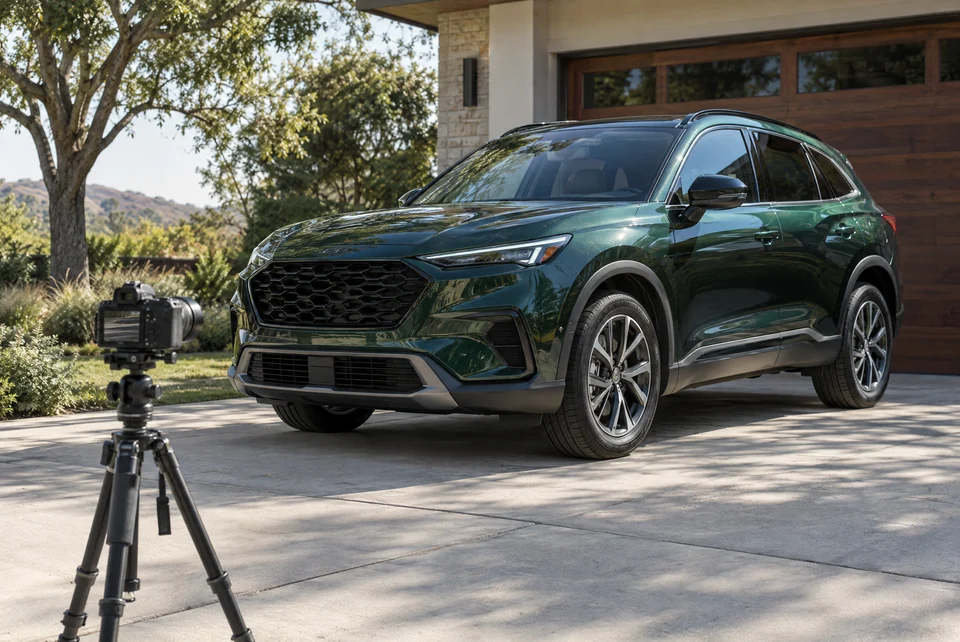
Useful transport photographs answer two questions: which part of the car is shown, and what condition was visible at that handoff? A large folder of random close-ups can answer neither. A repeatable shot sequence helps you compare pickup with delivery and gives an authorized receiver a practical reference. Use photographs alongside the written condition report, keeping the original files and enough context to understand each image.
What to know first
- Photograph the whole vehicle, each major surface and existing marks in a consistent order.
- Check focus and glare before the car leaves; more photos cannot fix missing views.
- Preserve originals and repeat the sequence at delivery when practical.
Prepare the scene and your phone.
Use a safe, permitted place with enough room to walk around the car. Clean enough dirt from the exterior to make visible condition understandable, without delaying a pickup that has already arrived. Daylight or even lighting is helpful; harsh reflections, heavy rain and darkness can conceal surface details.
Clean the phone lens, check storage and battery, and confirm the device’s date and time. Keep original images rather than applying filters or aggressive edits. If conditions prevent a clear view, record that limitation and discuss it during the inspection instead of presenting the photos as complete.
Start with a full walk-around.
Begin at the front-left corner and move around the vehicle in one direction. Include each corner, a straight view of the front and rear, and a broad view of each side. Keep the vehicle reasonably large in the frame without cutting off bumpers or wheels.
Add the roof where you can photograph it safely, plus the hood and trunk or rear hatch. Do not climb on the trailer or stand in traffic for a better angle. A short video can provide context, but still photographs are usually easier to compare panel by panel.
Add views that commonly disappear in wide shots.
Photograph each wheel face, visible lower bumper edges, mirrors, lamps and glass. Low splitters and side skirts may need a lower camera angle from a safe position. Open a door only where there is room and permission to inspect the relevant sill or interior area.
Record the odometer display and visible interior condition before handing over the keys. If accessories or loose items are permitted to travel, document the agreed items and their location separately. Photographs do not establish permission to ship items that the booking does not allow.
Show existing marks with both context and detail.
For a scratch, chip or dent, take one wider image showing its location and another closer image showing its appearance. Reflections can make a mark vanish, so change your viewing angle and check the result. Describe the panel and position in the written record.
Keep original filenames or create a simple index that links each mark to its images. Avoid drawing arrows directly onto the only copy. A separate annotated copy can be helpful, provided the untouched original remains available. Review the photos with the pickup condition report rather than assuming one replaces the other.
Save a set that another person can use.
Create separate pickup and delivery folders labeled with the vehicle reference and date. Back up the original files before deleting anything from your phone. Share the pickup set with your receiving representative while there is still time to explain unusual marks or areas that were hard to photograph.
The NAIC’s general auto-claim guidance recommends documenting events and keeping conversation notes. For transport, also retain the booking, handoff records and relevant messages. Follow the applicable reporting procedure if a concern arises; having photographs alone does not complete a claim or establish coverage.
Repeat the sequence at delivery.
Inspect while the vehicle and driver are available, where safe. Compare corresponding views and record any concern clearly on the delivery documentation. Obtain a copy and contact the specified transport or claims contact promptly. If lighting or weather limits the inspection, describe that fact accurately.
- Can someone identify the exact panel from this close-up?
- Are the wheel faces and lower body edges visible in the saved files?
- Does my receiver have the originals or only compressed message previews?
- Which surfaces could not be inspected clearly at either handoff?
Plan your next step
Coordinate an attended vehicle handoff ↗Plan your pickup requirements ↗Sources & further reading
Explore the service
Door-to-door car shipping ↗Published by Driveline Logistics. Guides explain planning considerations; shipment-specific equipment, availability and written terms are confirmed before booking.