
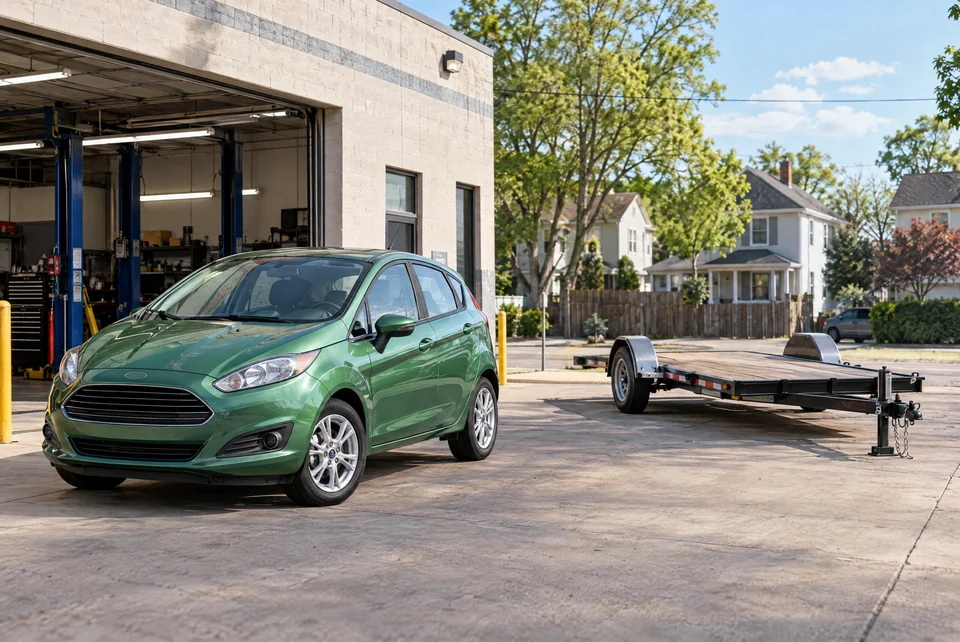
A short route can still involve a difficult pickup. Moving a car from a downtown garage to a suburban repair shop may require more coordination than a longer trip between open lots. The loading, securing, inspection and release steps remain part of the job regardless of mileage. For a short-distance shipment, focus first on the work at each end and then compare how the vehicle will travel between them.
What to know first
- Short mileage does not remove loading, inspection or access requirements.
- Compare complete proposals instead of applying a generic per-mile assumption.
- Keep pickup readiness and destination readiness on the same schedule.
Describe the reason for the move.
Explain whether this is a dealership transfer, repair-shop visit, purchase collection or move between residences. That context affects who releases the car, how urgently it must leave and whether the destination can receive it. A vehicle awaiting mechanical work may need different equipment from a running inventory unit.
State the actual constraints: a seller available only after work, a service department closing at five, or a parking space expiring tomorrow. Separate a preference from a firm restriction so the coordinator can explore options without promising an appointment that has not been confirmed.
Inspect the first and last few yards.
Describe steep ramps, garage height limits, tight turns, low branches and gates at both addresses. A full-size carrier may need a nearby permitted loading area. Confirm who can bring the car to that point and whether it can be moved safely under its own power.
If the car is non-running, do not assume a nearby street solves the problem. Explain how it is positioned and whether its wheels, steering and brakes work. The loading method and site access must fit each other before anyone schedules collection.
Compare equipment and availability together.
A local towing provider, a smaller vehicle carrier or a scheduled multi-vehicle transporter may offer different arrangements. Ask what equipment is proposed and whether the service is a direct trip or part of a wider route. The shortest road journey does not necessarily determine the quickest available handoff.
For a modified or low-clearance car, provide actual dimensions and handling instructions. Added enclosure alone does not answer ramp-angle or ground-clearance questions. Confirm the specific loading approach even when the destination is only a short drive away.
Read the total price and its assumptions.
Ask what the quoted amount includes at both ends, which vehicle condition was assumed and whether any separate service is required. Do not invent a minimum charge or assume a short move has a particular discount. The useful figure is the written proposal for your actual job.
Driveline’s online estimate uses approximate ZIP-based mileage rather than a surveyed road route. Closely spaced ZIP codes can still involve bridges, limited-access roads or a different truck route. Review the published pricing method, then have the vehicle, access and final booking checked manually.
Make both contacts ready at the same time.
Confirm the release contact has keys and authorization, and that the receiving location has space and staff. For a repair-shop destination, tell the shop whether the car can move after unloading. Ask where it should be left and who can sign when the service adviser is busy.
Keep a pickup condition record and compare it at delivery, even if the entire move happens within one metropolitan area. Obtain copies of the handoff documents. A short trip is still a transfer of custody and deserves a clear record of condition and receipt.
Check the details that could change the arrangement.
Verify the business identity and its role before paying. FMCSA provides an authority lookup for interstate providers; requirements for a wholly local move depend on the operation and jurisdiction. Ask the provider which registration applies instead of treating one identifier as proof of every permission.
- Will this be a direct movement or a stop on a wider route?
- Can the vehicle reach the truck from its current parking position?
- What happens if the receiving shop closes before arrival?
- Does the written amount include every agreed loading and handoff step?
Plan your next step
Compare open transport arrangements ↗Review the preliminary pricing method ↗Request a local-move review ↗Sources & further reading
Explore the service
Open car transport ↗Published by Driveline Logistics. Guides explain planning considerations; shipment-specific equipment, availability and written terms are confirmed before booking.