
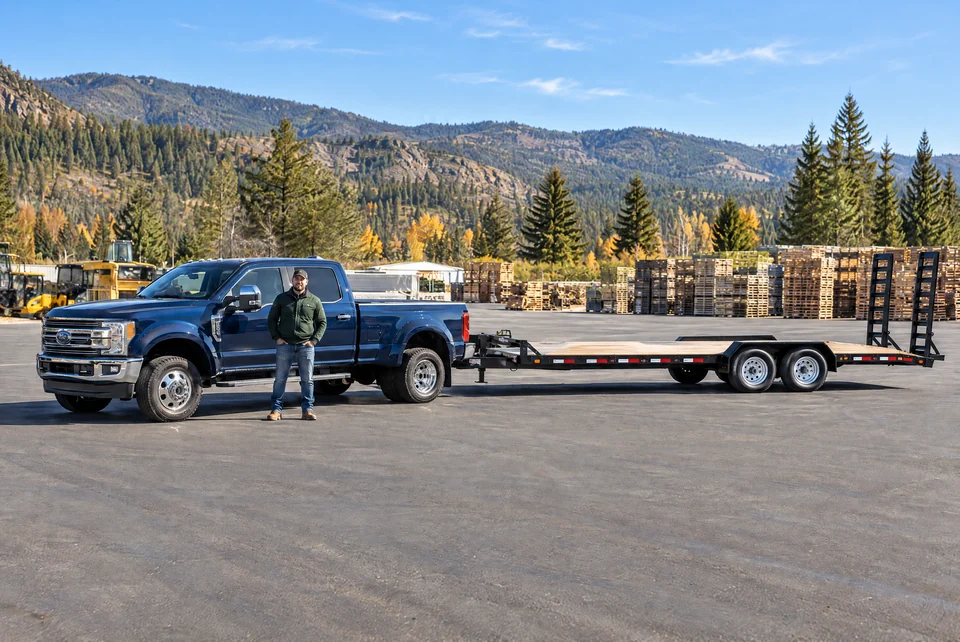
Hourly service with a driver, truck and trailer can be a useful arrangement to discuss when a local job has several handoffs or a defined block of work. A dealer collection followed by delivery to a property, for example, involves more than the driving distance. The best starting point is a practical job description. Explain what needs moving, where the equipment must go and which parts of the day depend on someone else.
What to know first
- Describe a complete job for a driver with truck and trailer.
- Confirm the equipment, site access and handoff contacts before the day.
- Get the start, finish, waiting and change terms in writing.
Describe the whole job in order.
List the pickup, intermediate stops and final delivery in the sequence you expect. State what happens at each location: collect one UTV, drop off an ATV, wait for a release, or return an empty trailer setup to finish the assignment. Identify any stop that is optional rather than part of the requested work.
Give the date and the time constraints that matter. A dealership closing time, a storage appointment and your personal preference for an early start are different kinds of constraints. Naming them helps the coordinator judge whether the route and handoffs can work together.
Confirm the driver, truck and trailer requirement.
Make clear that the request is for a driver attending with a suitable truck and trailer. Provide an inventory of every machine or other item you want included, together with dimensions, known weight information and operating condition. Equipment suitability needs to be established before discussing how much work fits into the available time.
Polaris’s trailer guidance considers capacity, tie-down points and loading features alongside vehicle dimensions. Use those as topics for the proposal: what setup is intended, how will the machines be loaded, and what assistance is needed at either end? Do not assume an unspecified trailer has every feature.
Make each site ready for the equipment.
Describe gate widths, overhead obstacles, tight turns and the space available to stop and load. Share photographs when access is difficult to explain. If the requested address cannot accommodate the proposed setup, discuss an agreed meeting point before the appointment.
Assign a person to provide access, keys and release approval. Have them reachable during the requested window. Clear movable obstructions in advance and confirm that another vehicle will not block the machine. These are straightforward ways to make the planned work easier to complete without inventing a guaranteed loading time.
Treat waiting as a question for the written quote.
Ask when chargeable time begins and ends, whether there is a minimum booking, how time is recorded and whether travel to or from the job is included. Ask how waiting, additional stops and a longer-than-planned assignment are handled. These are terms to confirm, not universal rules of hourly vehicle transport.
If an auction is one stop, confirm its appointment and release procedure. Copart’s published process, for example, includes a scheduled pickup and check-in before the vehicle reaches the loading area. That illustrates why a customer should distinguish a facility appointment from a promise that loading begins immediately.
Agree on a change process before the driver arrives.
Describe what should happen if a machine is unavailable, a seller is late or a vehicle cannot move as expected. The useful question is who makes the decision to wait, change the route or request another arrangement. Provide one main customer contact who can answer those questions.
Disclose new items and extra stops before adding them to the day. A spare machine can affect space and loading needs, while a stop in the opposite direction can change the route. Ask for approval of the revised scope and any price implications rather than assuming the original hourly request automatically covers it.
Send a request that can be reviewed.
Driveline can review the proposed local job and discuss a custom quote. Confirm the available arrangement and its written terms before committing your schedule. A mileage estimate by itself does not define hourly service, equipment availability or the amount of loading and waiting included.
- A driver with truck and trailer, the date and requested work window.
- A full inventory, operating condition and loading requirements.
- All stops in order, with contacts and access details.
- Appointments, potential waiting and any return movement.
- Questions about minimum time, billing boundaries and additional charges.
Plan your next step
Discuss hourly service with a driver, truck and trailer ↗Prepare an ATV dealer or auction pickup ↗Plan a round-trip vehicle move ↗Sources & further reading
Explore the service
Hire a driver with a truck & trailer ↗Published by Driveline Logistics. Guides explain planning considerations; shipment-specific equipment, availability and written terms are confirmed before booking.