
Buying an ATV or UTV away from home creates two separate tasks: completing the purchase and getting the actual machine ready for collection. The transport request should connect those tasks without assuming that a paid invoice means a driver can load immediately. Dealers may still be fitting accessories, while auctions have their own release and appointment processes. A short handoff plan helps the buyer, seller and transport coordinator work from the same facts.
What to know first
- Confirm the completed vehicle configuration and seller readiness.
- Follow the specific seller’s release and appointment procedures.
- Plan keys, paperwork and detached accessories as explicit handoff items.
Identify the unit and its final configuration.
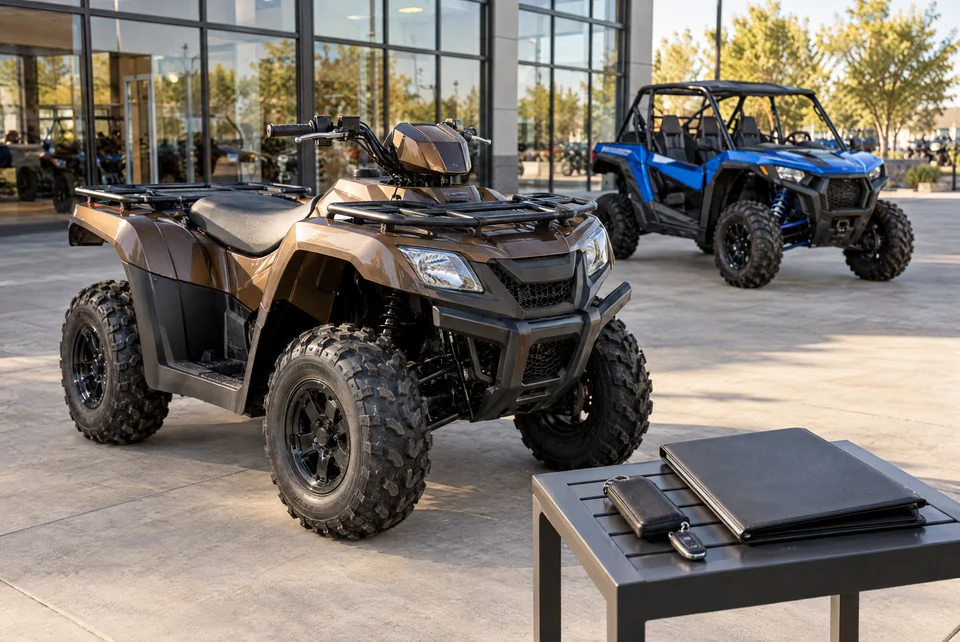
Send the exact make, model, year, trim and quantity, along with the stock or lot reference used by the seller. Ask for current photographs and confirm whether the pictured accessories are included. Roofs, storage boxes, oversized tires and plow equipment should be accounted for in the transport request.
For a dealer purchase, ask whether assembly, inspection or accessory installation is still pending. Obtain the dimensions of the completed machine rather than assuming the vehicle will travel exactly as shown in a listing. Reconfirm details if the sales agreement changes before pickup.
Ask the seller what releases the vehicle.
Confirm that the seller has cleared the transaction for pickup and ask what the collector must present. Establish who will issue any collection authorization, where it will be sent and which person can resolve a problem. Keep this distinct from simply sharing the address with a driver.
Copart provides one useful auction example: its published third-party transporter process sends the assigned transporter a Gate PIN and pickup instructions. Other sellers may use different systems. Follow the specific facility’s current procedure and send the coordinator the required information through an agreed channel.
Confirm where the machine is and how it loads.
Verify the physical collection location, not just the seller’s office or the location named in an advertisement. Ask whether the machine starts, rolls, steers and brakes, whether keys are available, and whether any damage or missing parts affect movement. Describe tracks or other unusual setups before equipment is selected.
Ask the facility what loading assistance it provides and have the transport coordinator confirm a compatible plan. Copart says purchased vehicles must leave its facilities on transport equipment. A listing description should not become an assumption that a purchased ATV can simply be ridden away.
Match the appointment to actual readiness.
Confirm the facility’s collection hours, appointment requirement and readiness date. Ask who will reschedule if payment clearance, accessory work or a release document is delayed. Send the coordinator any pickup deadline and ask the seller directly about storage terms rather than applying a generic free-storage period.
Copart’s instructions describe scheduled pickups and note that late arrivals may require another appointment. For any seller, make the practical distinction between a requested transport date and a confirmed release appointment. Both sides need to know which parts of the schedule have actually been agreed.
Account for documents, keys and detached parts.
Prepare a handoff inventory covering the key, any additional key, manuals, removed accessories and parts sold with the vehicle. Ask whether these items can travel with the machine and how they will be identified. A loose box should not become an unexpected extra item at loading.
Handle ownership paperwork as a separate seller instruction. Ask who receives it and whether it is being mailed or handed over through an authorized process. Copart publishes separate title-pickup conditions; the general lesson is to confirm paperwork delivery instead of assuming every document accompanies the vehicle.
Give the receiver the same information.
Confirm the destination, access and receiving contact before collection. Share the final accessory inventory and note any loading or unloading issue that the buyer already knows about. Arrange current condition photographs at handoff and compare the delivered machine with the pickup record and agreed inventory.
Driveline can review a dealer or auction ATV/UTV pickup for a custom transport quote. Send the seller’s contact, release requirements, vehicle configuration and requested route together. That allows the transport discussion to reflect the purchase you actually made, including a local delivery or an interstate move.
Plan your next step
Discuss ATV and UTV transport ↗Measure an ATV or UTV with accessories ↗Plan a local hourly transport job ↗Sources & further reading
Explore the service
ATV & UTV transport ↗Published by Driveline Logistics. Guides explain planning considerations; shipment-specific equipment, availability and written terms are confirmed before booking.