
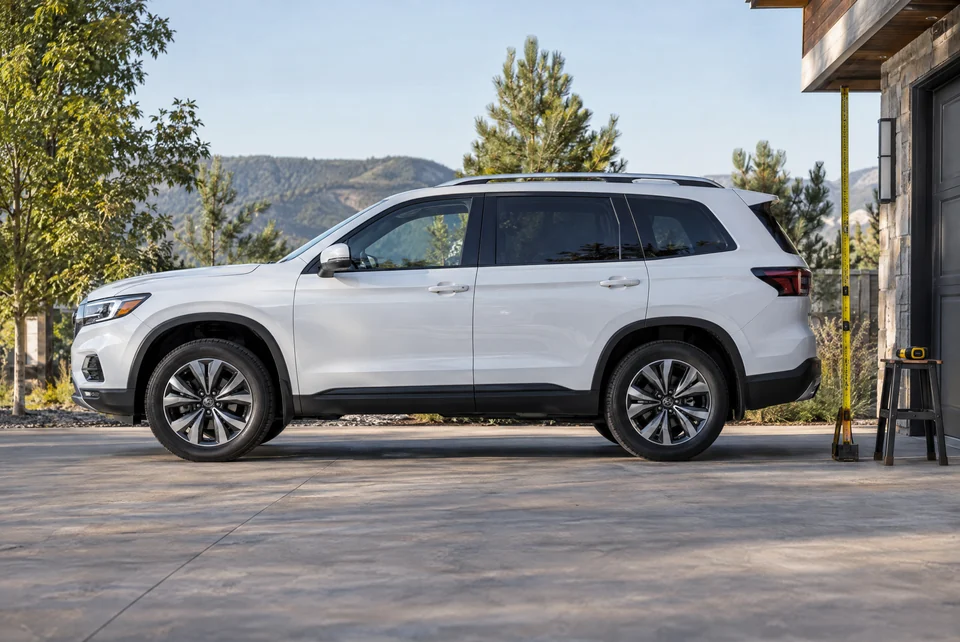
A stock specification sheet is a useful reference, but a transporter may need measurements of the car that is actually moving. Tires, suspension, mirrors, racks and bodywork can change the result. Create a simple dimension sheet that records the measurement method, vehicle setup and photographs alongside the numbers.
What to know first
- Measure the vehicle in its agreed transport configuration.
- Include overhangs and low points as well as overall height, width and length.
- Label every dimension and leave equipment compatibility to the transport provider.
Set up a repeatable measurement session.
Park on a firm, level surface with the vehicle secured and enough room to walk around it safely. Use a tape measure and a helper where possible. Record the date, tire setup and suspension setting. Do not stand in traffic or work under a vehicle supported only by a jack.
Choose one unit system and label it on every entry. If you also provide conversions, retain the original readings. A photograph showing the endpoints is often more useful than an unlabeled number copied from an online specification table.
Record the highest and widest points.
Measure height from the ground to the highest item that will remain fitted, including a rack, light bar or antenna where relevant. Explain whether that item can be removed and who will remove it. Measure after removal if that is the agreed transport configuration.
For width, distinguish the body, extended mirrors and folded mirrors if folding is permitted. Include tire or bodywork protrusions wider than the standard body. The provider needs to know which width applies while entering the trailer and whether someone can still open a door afterward.
Measure length and wheel position.
Record overall length from the foremost fitted part to the rearmost, including a splitter, rear wing projection or rear-mounted accessory. Then measure wheelbase between the front and rear axle centerlines on one side. A broadside photo helps the provider interpret those readings.
Add the distance from the front axle centerline to the forward tip and from the rear axle centerline to the rear tip. These overhangs help explain why two cars with similar ground clearance may meet a ramp differently. Report the measurements without declaring a universal safe ramp angle.
Identify the limiting ground clearances.
With the car stationary in the documented setup, measure visible clearance at the front lip, side skirts and other accessible low points. Describe the location of each reading. The lowest front point may differ from the lowest part between the axles.
Do not reach beneath the car or assume an unseen underbody part is higher. Ask a qualified shop to document inaccessible areas if needed. A lift system can change some readings; provide both the normal setting and any manufacturer-approved loading setting rather than presenting maximum height as permanent.
Add weight and handling information.
Provide a reliable weight reference and say whether it is a manufacturer specification or an actual measurement. Identify modifications, installed equipment and accepted cargo that could make the specification unrepresentative. Do not substitute the vehicle’s maximum permitted loaded weight for its actual transport weight without explaining the distinction.
FMCSA has different securement provisions for vehicle categories and weights. The carrier determines the applicable requirements and load arrangement. Your task is to supply accurate inputs, including whether the car rolls, steers and brakes and whether it needs model-specific handling instructions.
Send a dimension sheet that can be checked.
Put the vehicle identity, units, setup, measured values and photos together in one document or message. Ask the provider to confirm trailer opening, usable space and loading compatibility against those details. A trailer’s advertised capacity alone does not establish that a particular vehicle fits.
For a modified vehicle, request a manual quote and describe every change that affects the measurements. If wheels, ride height or accessories change after the review, send an updated sheet. Re-measure the relevant points before pickup instead of assuming the earlier equipment approval still applies.
Plan your next step
Discuss the vehicle and loading requirements ↗Request a transport quote ↗Measuring an ATV or UTV with accessories ↗Sources & further reading
Explore the service
Custom & specialty vehicle transport ↗Published by Driveline Logistics. Guides explain planning considerations; shipment-specific equipment, availability and written terms are confirmed before booking.