
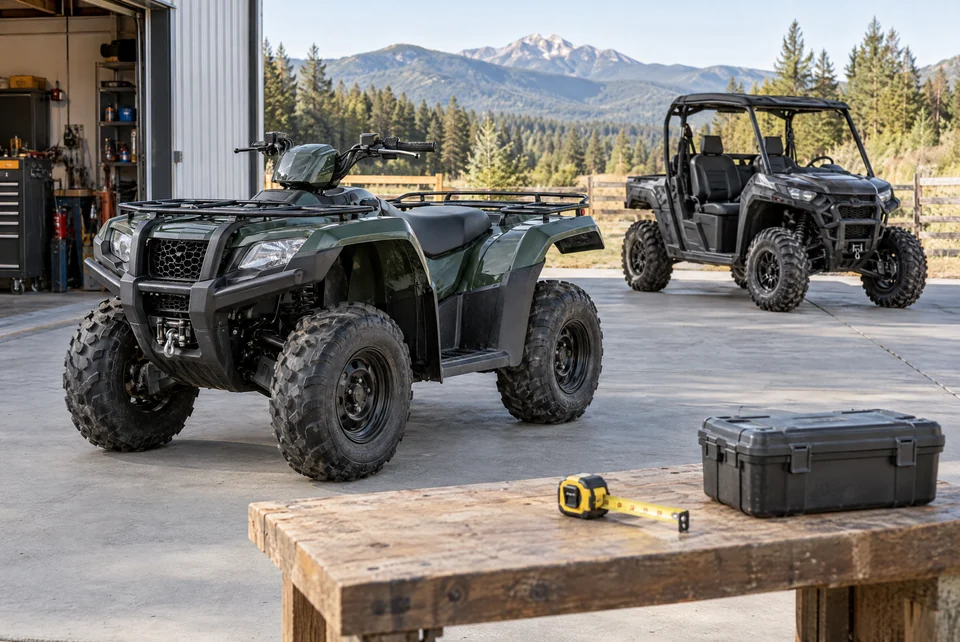
An ATV or UTV transport request becomes much easier to assess when it describes the machine that will actually arrive at pickup. A factory model name is a useful starting point, but larger tires, a roof, a plow or a rear storage box can change the space and handling the move requires. Before requesting local or interstate transport, put together a short measurement and accessory record. It can help prevent a quote based on the wrong configuration.
What to know first
- Measure the machine with the accessories that will remain fitted for transport.
- Disclose the operating condition and identify uncertain weight information.
- Use model-specific transport instructions when reviewing loading requirements.
Identify the exact machine before measuring.
Record the manufacturer, model, model year and trim, plus the number of machines in the shipment. A two-seat side-by-side and a longer crew version should be listed separately even when they share a model family. Include the identification details the seller or pickup location will use to release the correct unit.
Find the owner’s manual for that exact version. Factory specifications provide a reference, while your measurements describe its present configuration. Polaris’s trailer guidance specifically considers length, width, height and the combined weight of the vehicle and additional equipment.
Measure the outside edges that will travel.
Measure overall length from the furthest forward point to the furthest rearward point, width at the widest installed component, and height to the highest component remaining in place. Record the units clearly. Include items such as a brush guard, rear rack extension, mirrors, roof-mounted lights or a spare-tire carrier when they extend beyond the original body.
Make two sets of notes only if a component can be removed according to its instructions: the current dimensions and the proposed transport dimensions. Do not submit the smaller figure until removal is agreed and someone is responsible for completing it.
Create an accessory inventory with a travel plan.
List installed accessories and loose items separately. For every detachable box, cooler, tool holder, windshield or plow attachment, record whether it will stay fitted, be removed and shipped separately, or remain at the pickup site. Ask which loose items the transport arrangement can accept.
Transport instructions can depend on accessories. Polaris gives specific roof and loading-orientation guidance for RANGER models; Can-Am advises forward-facing transport when a windshield is fitted. Share the applicable instructions with the coordinator. Those examples are a reason to check your equipment, rather than a universal removal rule for every off-road vehicle.
Explain the weight and operating condition.
Provide the manufacturer’s listed weight and identify what that figure includes. Then disclose additions such as a winch, cab enclosure, tracks or other substantial equipment. Do not present an unverified estimate as a measured shipping weight. If the total is uncertain, say so and ask what information is needed.
Describe whether the machine starts, moves under its own power, steers, brakes and rolls. Note flat tires, missing keys, a locked drivetrain or damage that affects loading. These details help the transport coordinator assess the required equipment before a driver reaches the vehicle.
Use photographs to resolve the awkward details.
Send current front, rear and side views, along with close-ups of projecting accessories and anything damaged or loose. Photograph the available approach and loading area when a narrow gate, steep driveway or low doorway may matter. A photo complements measurements; it does not replace them.
Keep a copy of the relevant transport page from the owner’s manual available. The 2023 Sportsman 570 Touring/X2 manual, for example, identifies frame securement and excludes certain other attachment locations. Let the assigned transporter plan loading and securement using the correct vehicle instructions.
Send one consistent set of quote details.
Driveline can review these details for a custom ATV or UTV transport request. If you change wheels, add a roof or decide to include another machine after receiving a proposal, send the revised information before confirming the move. The written arrangement should match the final configuration.
- Exact model, quantity and current overall dimensions.
- Known weight information and a list of substantial modifications.
- Accessories staying fitted, removed items and any separate cargo.
- Operating condition, keys, pickup access and delivery access.
- Route, requested dates and any return journey.
Plan your next step
Discuss ATV and UTV transport ↗Compare ATV and side-by-side transport planning ↗Plan a round-trip ATV transport request ↗Sources & further reading
Explore the service
ATV & UTV transport ↗Published by Driveline Logistics. Guides explain planning considerations; shipment-specific equipment, availability and written terms are confirmed before booking.