
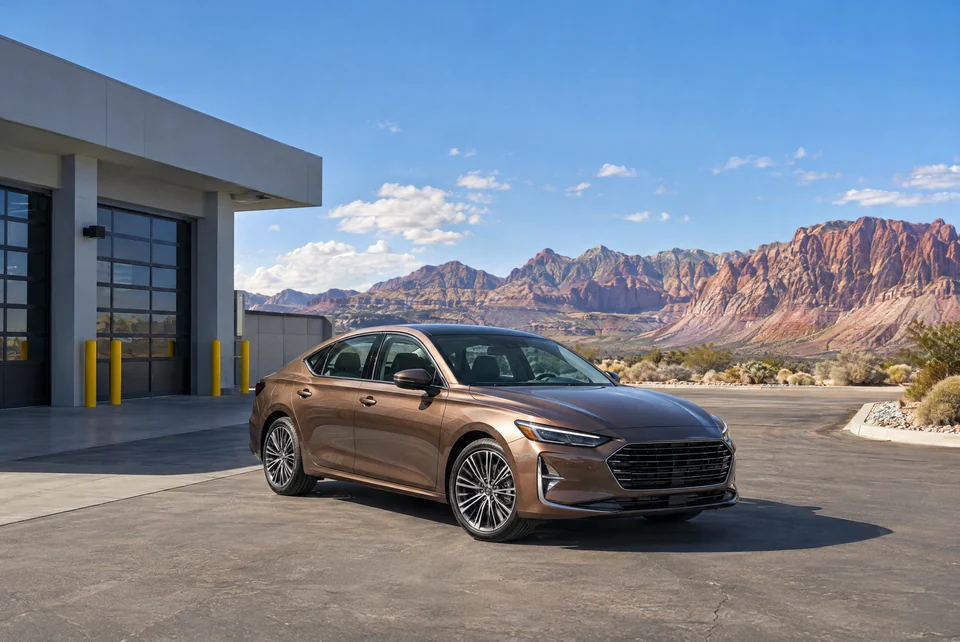
A Nevada shipment needs more than a distance between cities. A Las Vegas or Reno handoff may hinge on a building entrance, while a remote destination can require careful coordination with the only person available to receive the car. Describe the complete destination and build a communication plan before relying on an estimated arrival window.
What to know first
- Give the actual destination rather than substituting the nearest large city.
- Treat wind and winter restrictions as live factors in coordination.
- Agree on the receiving contact, daylight preference and alternate location early.
Make the metro handoff specific.
In Las Vegas, an address may refer to a hotel, resort, gated neighborhood or large apartment property with several entrances. Identify the commercial access point and who permits loading there. A guest drop-off lane or parking garage is not automatically an acceptable place for a transporter.
For Reno or Sparks, give the same detail about the final property and any approach toward higher ground. Ask whether an approved off-street meeting area is available. Keep the receiver’s entrance instructions short and precise so the truck is not sent through a sequence of unsuitable gates.
Describe the remote portion honestly.
If the car is headed to a smaller community, ranch or property well beyond the city, provide its actual ZIP code and access description. Include unpaved roads, gates, turning space and any uncertainty about the address pin. Do not use a metro estimate while expecting an unreviewed final leg.
Remote availability has to be reviewed for the specific request. Ask what can be coordinated around your location and window rather than assuming an immediately available truck. If a nearby town is proposed for delivery, calculate the practical work the receiver must do to meet there.
Read wind and winter information before traveling.
Nevada 511 provides road conditions, closures, incidents, weather information and truck-related layers. Its road-condition categories include wind alerts and winter restrictions. Look at the relevant road segments and notice whether the reported issue applies to certain vehicle types rather than all traffic equally.
Share material changes with the coordinator. The fact that a passenger car can travel does not determine whether a tall, loaded transporter can use the same route at that time. The carrier must evaluate applicable conditions for its equipment; a customer should not prescribe a shortcut around an advisory.
Create a remote receiving and communication plan.
Ask the local receiver when they can attend and whether phone reception is reliable at the property and alternate location. Exchange an additional contact method where needed before the vehicle leaves the origin. Avoid instructions that require the driver to arrive first and then search for a signal.
Where the destination is unfamiliar or poorly lit, discuss a daylight preference and what happens if the expected window shifts. That preference is a planning requirement to review, not an automatic delivery guarantee. Agree how the parties will choose a revised handoff rather than leaving someone waiting indefinitely.
- Primary and backup receiver with confirmed available hours.
- Exact location pin plus written entrance directions.
- Known phone-coverage limitations and an agreed check-in method.
- Lighting and space for a full condition inspection.
- Contingency if the receiver cannot reach the planned location.
Choose an alternative with enough room and permission.
A suitable fallback is an approved place where the carrier can maneuver and the car can safely be loaded or unloaded. Ask about surface, overhead obstacles and any opening hours. A wide-looking highway shoulder or empty private lot should not be assumed available.
Confirm the car can reach the meeting point in its present condition. Low clearance, a flat tire or an intermittent starting problem may defeat a plan that depends on driving it there. Tell the team about those issues and review additional handling before changing the address.
Keep the estimate tied to the reviewed scope.
Driveline’s ZIP-based distance is an approximation, not a survey of the road to a remote property. Explain the final approach, vehicle modifications and desired transport type when requesting review. Enclosed equipment still needs compatible loading access.
Confirm the final price, equipment, receiving arrangement and pickup window manually before booking. If the accepted endpoint is a town meeting area rather than the property itself, make that distinction explicit in the written plan and in the receiver’s instructions.
Plan your next step
Specialty transport review ↗Enclosed transport options ↗Low-clearance loading preparation ↗How delivery inspection works ↗Request a preliminary quote ↗Sources & further reading
Explore the service
Custom & specialty vehicle transport ↗Published by Driveline Logistics. Guides explain planning considerations; shipment-specific equipment, availability and written terms are confirmed before booking.