
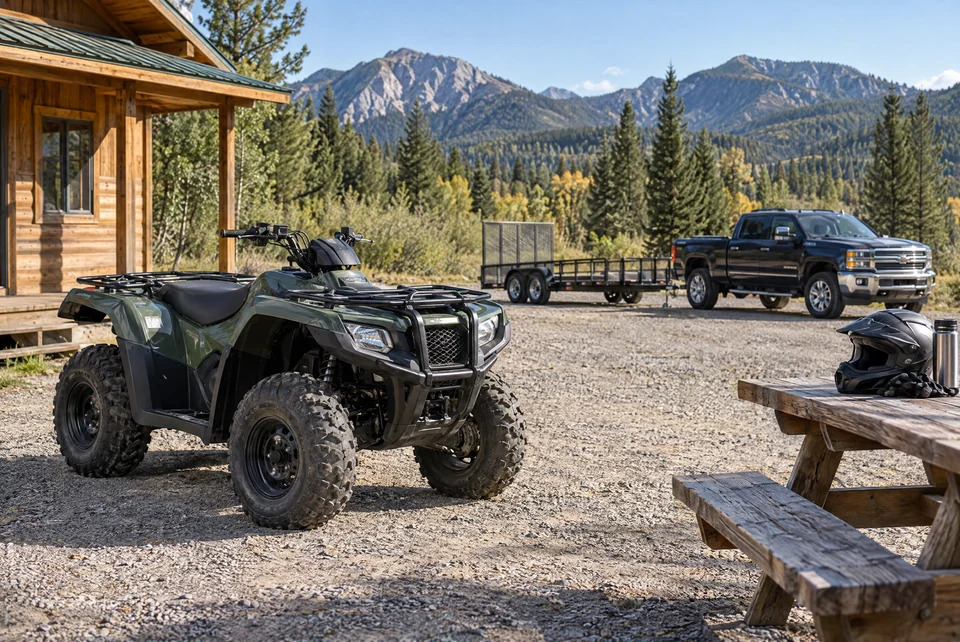
A weekend of riding, a seasonal visit or an off-road event can require two transport journeys with different needs. The outbound machine may be clean, running and ready at home; the return pickup may happen at a busy staging area after several days of use. Planning both legs together gives the coordinator a fuller picture. It also gives you a clear place to address return timing, meeting locations and what should happen if the vehicle’s condition changes.
What to know first
- Describe outbound and return journeys as separate legs of one request.
- Confirm truck access as well as riding-area access.
- Update the return loading plan if use, damage or accessories change the vehicle.
Write down two complete journeys.
Create separate records for the outbound pickup and delivery, then the return pickup and delivery. Include addresses or precise meeting locations, the requested date window and a contact for each handoff. A return journey should be expressly included in the written proposal; an outbound booking alone does not describe the second leg.
Say whether the machine returns to the original address or goes somewhere different, such as a workshop or storage facility. If several owners are sharing a trip, identify which machines and contacts belong to each destination.
Confirm the destination before fixing handoff details.
Check the riding venue’s current opening information, vehicle restrictions and transport access. For National Forest travel, official Motor Vehicle Use Maps identify permitted routes and may show seasonal restrictions. The Forest Service’s Gifford Pinchot guidance illustrates why a road visible on another map is not enough to establish motorized access.
Confirm separately where a truck and trailer may enter, stop and unload. The riding trailhead and the practical transport meeting point may be different locations. CPSC recommends keeping recreational off-highway vehicles off paved roads, so do not build the plan around riding along public pavement from an unsuitable drop-off point.
Choose between a later return pickup and waiting time.
Explain whether you want the vehicle dropped off and collected on a later day, or whether you are asking about a driver, truck and trailer remaining available during a short visit. These are different scheduling requests. Ask what can be arranged and how any waiting or reserved time would be described in the quote.
Discuss how changes are handled before the trip begins. Weather, event delays or a late finish can affect the return handoff. Agree on the contact method, the notice requested for a change and what requires an updated proposal; do not assume unlimited flexibility.
Prepare for the machine to return differently.
Before the return pickup, check for loose accessories, damage, tire problems and anything that changes the machine’s ability to roll, steer, brake or move under power. Send updated information promptly if it needs different loading assistance. A transport arrangement should not be treated as an unconfirmed trail-recovery service.
Polaris advises securing or removing loose cargo and checking for loose parts before RANGER transport. Apply your machine’s own transport instructions again for the return leg. Include enough time after the final ride to collect equipment, prepare the vehicle and document its condition.
Plan separately for riders and riding gear.
Vehicle transport does not establish a passenger itinerary. Arrange how the riders will reach and leave each handoff point, and confirm who has the keys if the owner will not be present. Share a reachable contact even where the riding destination has limited mobile coverage.
List helmets, tools, coolers, spare wheels and other gear you want moved, then ask which items can be included. Do not assume the vehicle’s seats, racks or cargo bed can be used as unrestricted shipping space. Keep the same inventory for both legs so items do not become an unplanned return load.
Request a round-trip proposal with clear assumptions.
Driveline can review a round-trip ATV or UTV request using those details. Ask the written proposal to identify the legs being coordinated and any timing assumptions. Review the return plan before departure, then update it when circumstances change so everyone works from the same information.
- Both routes, handoff contacts and requested date windows.
- Each machine’s model, dimensions, accessories and operating condition.
- Approved truck access and a practical meeting location.
- A later collection or a specific request for waiting time.
- Separate gear, change procedures and return-condition updates.
Plan your next step
Discuss round-trip vehicle transport ↗Discuss ATV and UTV transport ↗Plan hourly driver, truck and trailer service ↗Sources & further reading
Explore the service
Round-trip vehicle transport ↗Published by Driveline Logistics. Guides explain planning considerations; shipment-specific equipment, availability and written terms are confirmed before booking.