
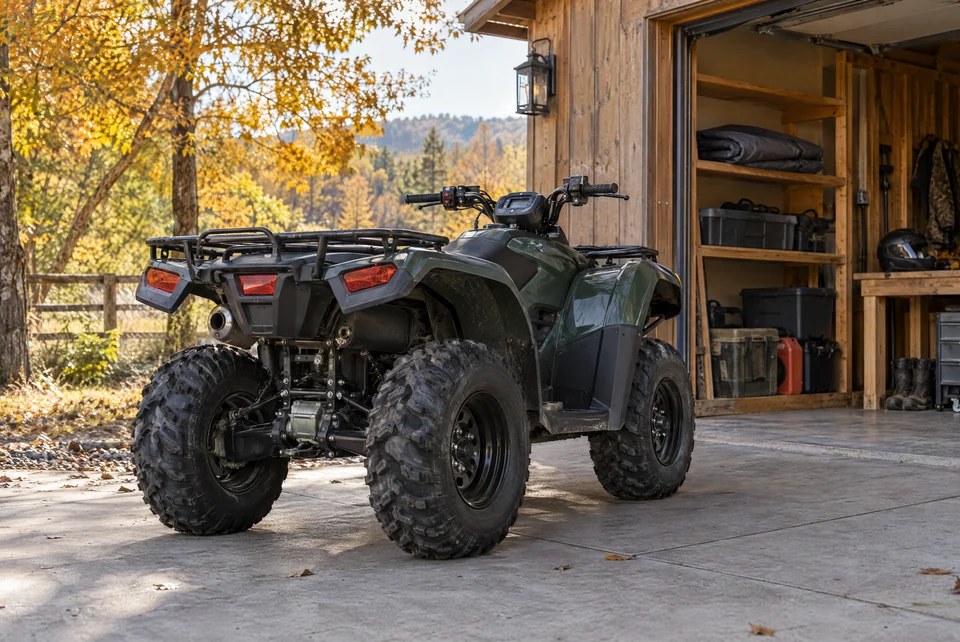
Moving an ATV or UTV into seasonal storage involves more than finding space for it. The machine must be ready to load, the storage location must be ready to receive it, and the winterization plan needs to fit that sequence. A vehicle that has already been put out of service may require different handling from one that can drive onto suitable transport equipment. Plan the move and storage preparation together, using the instructions for your exact machine.
What to know first
- Coordinate storage preparation with the machine’s loading needs.
- Tell the transporter if the vehicle must remain unstarted.
- Confirm facility access and assign the final storage setup to a specific person.
Choose the receiving space before arranging pickup.
Confirm that the storage provider accepts your type of vehicle and ask about its access, fuel, battery and preparation policies. These are facility-specific questions; do not assume every location accepts the same configuration or uses the same conditions. Identify who will admit the driver and receive the machine.
Check the path into the space, including doors, gates, turns and overhead clearance. Use the vehicle’s current measurements with fitted accessories. A unit that fits inside a building can still encounter a problem at its entrance, particularly with a roof, mirrors or equipment projecting from a rack.
Agree on the order of transport and winterization.
Decide which preparation will happen before pickup and which will happen once the machine reaches its storage position. Record who is responsible for each step. If a dealer is winterizing it first, ask how that changes its ability to move and pass the answer to the transport coordinator.
Polaris’s winter storage guidance says to remove the battery when the ATV or side-by-side is positioned for storage. Its ATV storage instructions also warn against restarting an engine during the storage period after protective preparation. Those details make sequencing important; they are not a universal service procedure for every model.
Describe any condition that changes loading.
Tell the coordinator if the battery has been removed, the engine has been prepared for storage, tires are soft, wheels are locked or the machine cannot move under its own power. If it must remain unstarted, say so explicitly before pickup. Do not assume the driver can reverse a winterization procedure on arrival.
Arrange the loading method around the condition that will actually exist on moving day. If that condition changes after the quote, update the request. Keep the relevant owner’s manual available, and let a qualified service provider resolve maintenance questions before transport instructions are finalized.
Prepare the machine and document what travels.
Clean and inspect the vehicle following the manufacturer’s recommendations so you can record its condition and identify loose or damaged components. Polaris begins its ATV storage guidance with needed repairs and exterior cleaning. Photograph the machine before collection and note accessories that will stay fitted.
List removed items and decide where they will be stored. Confirm separately whether any of them can travel with the vehicle. Use the model’s transport instructions for securing caps, seats and other components; the 2023 Sportsman 570 Touring/X2 manual is one example with specific preparation and attachment guidance.
Separate storage protection from travel preparation.
Ask how the machine will be covered after placement and whether any cover is intended for transport use. A storage cover should not be assumed suitable for travel simply because it fits. Share the cover’s instructions and have its use agreed as part of the transport plan.
Polaris’s ATV storage guidance calls for a ventilated location and warns that unsuitable cover materials can trap condensation. The practical receiving plan should therefore identify who finishes the storage setup after unloading, including any maintenance steps and cover fitting specified for that vehicle.
Keep a clear record for the next collection.
Driveline can review transport into storage, a later collection or a round-trip request for a custom quote. A future collection should be expressly discussed and confirmed. When the season changes, update the machine’s condition and readiness before the return move rather than assuming it will load as it did on arrival.
- The storage address, exact unit or location and access contact.
- Keys, accessory inventory and condition photographs.
- Battery status and completed storage preparation.
- Any instruction that the machine must remain unstarted.
- A provisional collection period and who will prepare it for removal.
Plan your next step
Discuss ATV and UTV transport ↗Discuss a later return journey ↗Measure your machine with its accessories ↗Sources & further reading
Explore the service
ATV & UTV transport ↗Published by Driveline Logistics. Guides explain planning considerations; shipment-specific equipment, availability and written terms are confirmed before booking.