
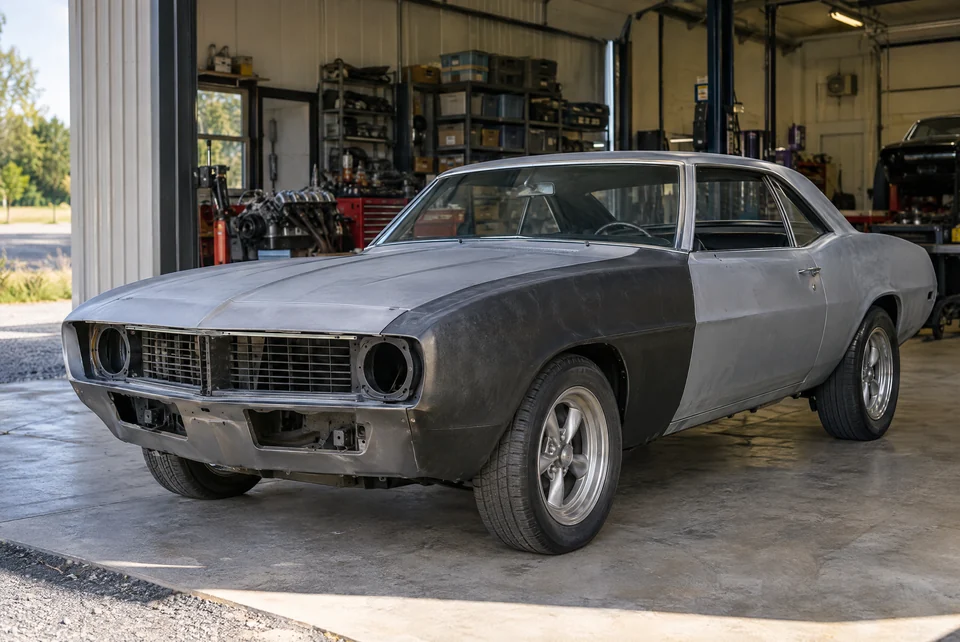
A project car can mean an unfinished restoration, a complete vehicle with a failed engine or a shell surrounded by spare parts. Each presents a different move. The most useful first step is a written condition brief with dated photos, an honest list of unknowns and a named person who understands the vehicle.
What to know first
- Describe each movement function instead of relying on “project” or “non-runner.”
- Separate attached vehicle components from loose parts and shop equipment.
- Resolve loading assistance and workshop receiving access before dispatch.
Describe the vehicle as it stands today.
Start with the year, make, model and identifying reference. Then state whether the engine starts and whether the vehicle can move under its own power. Answer rolling, steering and braking questions separately. A car may roll but have no usable steering column, or start without having working brakes.
Record missing wheels, flat tires, disconnected driveshafts, unfinished suspension and any wheel that binds. Use “not checked” where appropriate. Ask the shop to verify uncertain functions safely; do not convert a seller’s old description into a current fact.
Make a photograph set that answers loading questions.
Take an overall view from each corner and a side view showing ride height. Add clear photographs of the wheels, exposed components, front and rear overhangs, and the space around the car. Show the route from its storage position to the proposed loading area.
If it sits in a crowded workshop or behind other vehicles, explain who will clear that route and when. Do not crawl beneath an unsupported vehicle for pictures. A workshop can provide appropriate underbody documentation when a structural or attachment question needs professional inspection.
Separate restoration work from transport preparation.
List loose body panels, glass, trim, batteries and any unsecured mechanical assemblies. Ask the responsible workshop which items need repair, removal or stabilization before movement. A bonnet resting in place or an engine on temporary supports is a condition issue that must be resolved, not hidden by a cover.
Disclose active leaks and any suspected fuel, electrical or high-voltage damage. Standard vehicle transport does not automatically include recovery, hazardous-material handling or mechanical repairs. If a hazard is unresolved, obtain specialist assessment before seeking a routine dispatch.
Agree on a complete loading plan.
Ask the provider what equipment and on-site assistance the described condition requires. Confirm who supplies that assistance and whether the same need exists at delivery. A winch does not by itself solve locked wheels, missing steering or inadequate ground clearance.
Use the vehicle manufacturer’s instructions where applicable and qualified workshop guidance for a modified build. FMCSA publishes cargo securement requirements, but those requirements do not identify suitable attachment points on your unfinished vehicle. The carrier must review the actual structure and restraint arrangement.
Treat parts as a separate inventory decision.
Photograph and count spare wheels, boxed trim and other items you want moved. Record their dimensions and approximate weights. Obtain explicit acceptance, packing instructions and written terms before including them; available cabin space is not permission to load it.
Large or heavy parts may need a separate freight arrangement. Keep the parts list tied to the vehicle reference so neither shop assumes that a missing box was left with the other. Avoid packing loose items where they can obstruct controls, visibility or the driver’s access.
Prepare the receiving shop and quote request.
Confirm that the destination has room, staff and agreed equipment to accept the project in its current state. Provide receiving hours and an alternative contact. Ask where it will be placed after unloading and whether the transporter can reach that area.
Send Driveline the condition brief, photos, dimensions, locations and readiness date. Modified vehicles require a manual quote. Retain the pickup record and compare it at delivery, including accepted parts and pre-existing incomplete areas, so the move ends with a clear record rather than a dispute about the restoration.
Plan your next step
Discuss the vehicle and loading requirements ↗Request a transport quote ↗Sources & further reading
Explore the service
Non-running vehicle transport ↗Published by Driveline Logistics. Guides explain planning considerations; shipment-specific equipment, availability and written terms are confirmed before booking.