
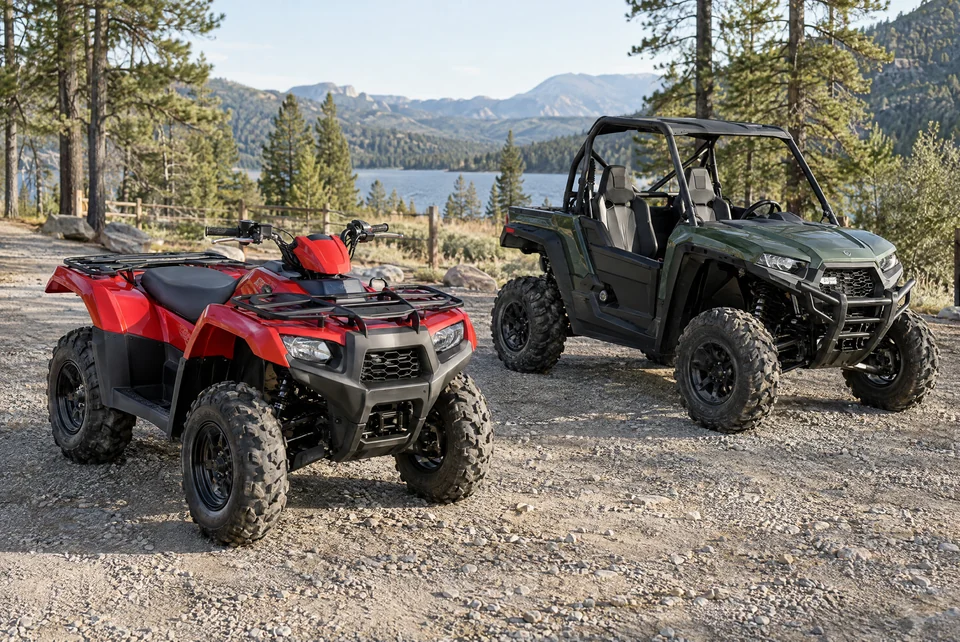
People often use ATV, UTV and side-by-side loosely when requesting transport. Those labels help start the conversation, but they do not tell a coordinator everything needed to plan the move. A compact quad, an enclosed-cab utility machine and a multi-seat recreational vehicle can need different space and access. The useful comparison is between the machines you own, their current condition and the journey you want to arrange.
What to know first
- An exact model and configuration are more useful than the label ATV or UTV.
- Fit, loading condition and protection preferences are separate planning questions.
- A mixed shipment needs an inventory of each machine before equipment is discussed.
Use the vehicle type to start the description.
An ATV commonly has straddle seating and handlebar steering. The Consumer Product Safety Commission distinguishes recreational off-highway vehicles by features including a steering wheel, bench or bucket seating, foot controls and a rollover protective structure. UTV and side-by-side are also common customer terms, so include the exact make and model rather than relying on terminology alone.
Identify the trim and seating configuration. If you are moving a group of machines, list each separately. A transport request described simply as three ATVs can conceal a very different load when one is actually a large side-by-side.
Compare transport space using actual dimensions.
Start with the footprint and overall height of each machine as it will be shipped. Note fitted roofs, mirrors, tire changes and other protruding equipment. An enclosed trailer also needs a suitable entry opening and usable interior space; its external dimensions do not establish whether a particular vehicle will fit.
For several machines, do not assume that adding their lengths or comparing one width with the trailer deck proves a workable arrangement. The coordinator also needs to consider loading order and room to secure each unit. Ask for a proposal based on the full inventory.
Separate vehicle size from loading difficulty.
A small quad with locked wheels can create a different loading problem from a larger machine that runs normally. Report whether each unit can start, roll, steer and brake, and whether its key is available. Include the position where it is parked, particularly if access requires moving other equipment first.
Describe any low attachment, damaged suspension or unusual tire setup that may affect the loading approach. If assistance is needed, have the transport provider confirm the available method before pickup. Avoid assuming a winch, liftgate or particular ramp will be included because of a vehicle category.
Discuss open or enclosed transport around your priorities.
Open and enclosed equipment offer different travel environments. An enclosure can add shelter from weather and road exposure, while an open setup may be an option worth discussing for the route and machines involved. Availability, loading compatibility and your preferences all belong in the same conversation.
Mention fragile accessories, a specialty finish or equipment you want to keep sheltered. Ask what setup is being proposed and how its loading access works. Polaris’s guidance treats trailer dimensions, capacity and loading features as separate considerations; the presence of walls alone does not answer all three.
Give local and interstate moves the right context.
For a local move, appointment times, driveway access and the sequence of stops may be central to the plan. An interstate request also needs a realistic pickup window and a receiving contact who can coordinate delivery. Neither distance alone nor the ATV-versus-UTV label establishes the price or transit schedule.
For covered interstate commercial transport, FMCSA cargo securement requirements address preventing loads from shifting or falling. Ask the assigned provider to plan the securement for the actual machines. This is especially relevant when a mixed shipment includes different configurations; a customer should not need to invent one strapping method for all of them.
Build a comparison that can be quoted.
Driveline can review an ATV, UTV or mixed-vehicle request and discuss a custom transport proposal. Compare the proposed equipment, timing and included handling together. A useful decision comes from the details of your shipment, rather than an assumed standard price for an entire vehicle type.
- List every model, quantity and seating configuration.
- Provide overall dimensions, weight information and modifications.
- State each machine’s operating and loading condition.
- Identify the route, access limits and requested travel windows.
- Explain protection preferences and whether a return trip is needed.
Plan your next step
Discuss local or interstate ATV and UTV transport ↗Measure accessories and transport dimensions ↗Plan hourly service with a driver, truck and trailer ↗Sources & further reading
Explore the service
ATV & UTV transport ↗Published by Driveline Logistics. Guides explain planning considerations; shipment-specific equipment, availability and written terms are confirmed before booking.