
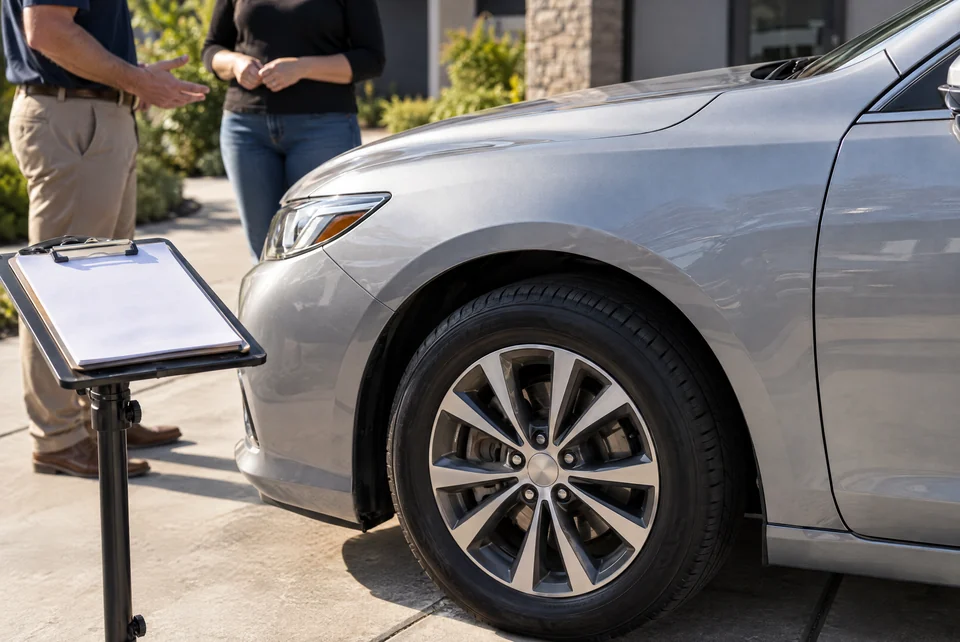
Condition photos and transport paperwork work together. One gives a visual record; the other records the shipment and the observations made during handover. Neither should be treated as a rushed formality. The most useful record is accurate, readable and retained by the people responsible for the vehicle.
What to know first
- Inspect the actual car with enough light and time.
- Review condition notes instead of assuming the document is complete.
- Keep pickup and delivery records with the shipment reference.
Understand the purpose of the paperwork.
A bill of lading or related transport record identifies the shipment. For carriers and movements covered by 49 CFR 373.101, the receipt or bill of lading includes the shipping and receiving parties, origin, destination and a description of the freight. Condition notes and booking terms may appear on related records. Read the documents for your shipment and ask where inspection observations are recorded.
Do not assume it is a mechanical inspection report, an appraisal or a substitute for the booking terms. If you are buying the car, purchase due diligence remains a separate task.
Make the pickup inspection specific.
Look over the car in usable lighting and note existing marks accurately. Take wide photos that show where a detail is located, then add closer images of known damage. Record relevant wheels, glass, bodywork and accessories rather than photographing only the most attractive angle.
If the vehicle is dirty or conditions make inspection difficult, note the limitation and ask how it will be handled. Do not sign a description you believe is inaccurate just to make the pickup faster.
Keep copies you can find.
Save the pickup paperwork, original photos, shipment reference and the carrier contact information together. If the record is digital, make sure you can access a copy after the handover rather than relying on a temporary screen.
Give the receiving contact the information needed to compare the car at delivery. That person should not be asked to assess the condition without knowing what was recorded at pickup.
Review the car again at delivery.
Compare the vehicle with the pickup condition record and look at areas that may be easy to miss during a hurried handoff. Document any new concern accurately and retain supporting photos.
Follow the applicable reporting instructions promptly. Under 49 CFR 370.3, damage notations or inspection reports alone do not satisfy the minimum claim-filing requirements for claims covered by that rule. Keep the photos and condition record, and ask the responsible provider how to submit the required claim documents.
- Shipment and vehicle identification checked
- Existing condition reviewed and recorded
- Pickup photos retained in original form
- Delivery contact given the pickup record
- New concerns documented accurately
- Required reporting steps and contacts identified
Make the representative’s role clear.
If someone else releases or receives the car, explain that they need to review both the vehicle and the paperwork. Choose a person who is authorized to act and has time to complete the handover.
Driveline’s coordination process emphasizes condition documentation at the relevant stages. Keep the records tied to the actual shipment; website photographs illustrate the topic and are not a substitute for your own vehicle’s inspection.
Plan your next step
How to photograph a car before transport: a repeatable shot list ↗Delivery-day car inspection: a useful walk-around ↗Vehicle transport and the odometer: what to record at each handoff ↗Sources & further reading
Explore the service
Door-to-door car shipping ↗Published by Driveline Logistics. Guides explain planning considerations; shipment-specific equipment, availability and written terms are confirmed before booking.