
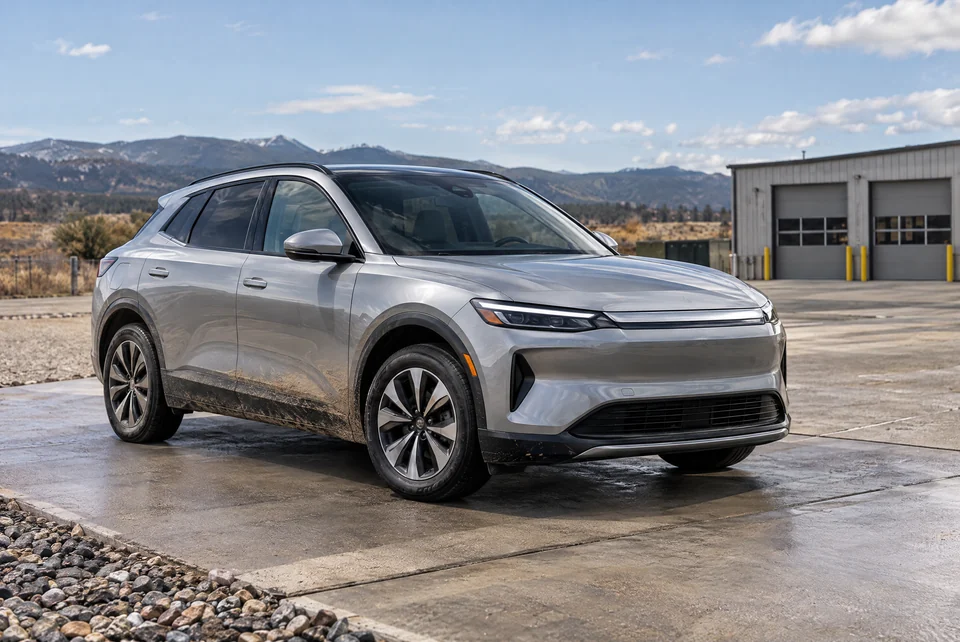
Do not present a flood-exposed electric or hybrid vehicle as an ordinary running or non-running shipment. Water exposure may affect the high-voltage battery even when exterior damage looks limited. Before scheduling transport, identify the exposure, stop normal charging or starting attempts, and obtain direction from the manufacturer, dealer, emergency responders or an appropriately qualified assessor. Driveline can review a documented transport request; this page does not promise acceptance or replace hazardous-material requirements.
What to know first
- Disclose any known or suspected flood exposure before asking for ordinary vehicle transport.
- Do not charge, start or troubleshoot a potentially damaged high-voltage vehicle just to make it transport-ready.
- A qualified assessment and current handling instructions must come before equipment and scheduling decisions.
Treat water exposure as a safety fact, not a cosmetic detail.
Record what is known about the event: fresh or salt water, approximate depth, how long the vehicle was exposed, whether it was moved afterward and whether anyone attempted to start or charge it. Include the date and location of the exposure. If the history is uncertain, say that directly rather than describing the battery as undamaged.
NHTSA warns that flooded hybrid and electric vehicles can present high-voltage shock and fire hazards and recommends contacting the dealer or emergency services when battery damage is suspected. A clean exterior, a working key fob or an illuminated dashboard is not a battery assessment.
Pause ordinary preparation and get current direction.
Do not plug the vehicle in, attempt repeated starts, disconnect orange high-voltage components or improvise electrical tests. Follow the owner's manual and manufacturer-specific guidance, and use emergency services when there is heat, smoke, hissing, unusual odor, sparking or another immediate hazard. Keep people away from the vehicle until the responsible safety professional gives direction.
NHTSA also publishes manufacturer emergency-response guides and rescue sheets by vehicle make and model. Those materials are designed for trained responders and recovery personnel; owners can use the directory to identify the correct source, not as instructions for a do-it-yourself battery inspection.
Obtain an assessment that identifies the transport question.
Ask the manufacturer, servicing dealer, qualified EV technician, salvage professional or other appropriate assessor to document what was inspected and whether installed-battery damage is suspected. The useful transport brief should distinguish a vehicle that is simply inoperable from one that may contain a damaged or defective lithium battery.
PHMSA's April 7, 2023 safety advisory specifically addresses electric vehicles whose installed lithium batteries may have been damaged by flood-water submersion. It reminds owners, salvage companies and vehicle transport companies that battery damage must be assessed and applicable Hazardous Materials Regulations must be observed. A standard non-running-car quote does not answer that regulatory question.
Send a factual review packet before equipment is assigned.
Provide the vehicle year, make, model, VIN through the private operational channel, exact pickup setting, key availability and whether the wheels roll, steer and brake. Attach or summarize the assessment, manufacturer instructions and any restrictions given by the facility holding the vehicle. Identify whether emergency services, an insurer or a salvage facility has placed conditions on release.
Do not upload sensitive reports, ownership documents or full insurance files into a public notes field. Ask which private method the coordinator uses for review. The transport team needs enough verified information to decide whether ordinary auto-transport equipment can be considered or a specialist response is required.
- Date, location, water type and known depth or duration
- Any start, charge, tow, fire or emergency-response history
- Assessment source, date and written conclusion
- Current storage conditions and facility release contact
- Vehicle rolling, steering, braking and key status
- Current manufacturer or responder handling restrictions
Do not assume a normal carrier can accept the vehicle.
Open versus enclosed service, winch availability and ordinary inoperable handling are secondary until the battery question is resolved. A carrier that transports undamaged EVs is not automatically equipped or authorized for a vehicle with a potentially damaged high-voltage battery. Do not conceal the exposure to obtain pickup.
Acceptance, equipment, packaging, marking, routing and emergency-planning requirements depend on the actual condition and applicable rules. Driveline does not diagnose batteries through a form and this guide does not provide a packaging or securement procedure. A request may need specialist review, different service or repair before movement.
Reconfirm condition before release and at handoff.
Condition can change between assessment and pickup. The releasing facility should report any new heat, odor, noise, smoke, warning message, fluid or physical change before the truck arrives. If the written assessment, vehicle condition or release instructions have changed, stop the planned handoff and request another review.
Keep the assessment, transport decision, bill of lading and condition record together. At delivery, the authorized receiver should already know the vehicle's history and the handling restrictions supplied by the responsible professionals. Transport completion does not establish that the battery is safe to charge, repair, store indoors or return to service.
Plan your next step
Prepare model-specific electric vehicle instructions ↗Describe a non-running vehicle accurately ↗Separate recall status from actual vehicle condition ↗Request an individual transport review ↗Sources & further reading
Explore the service
Non-running vehicle transport ↗Published by Driveline Logistics. Guides explain planning considerations; shipment-specific equipment, availability and written terms are confirmed before booking.