
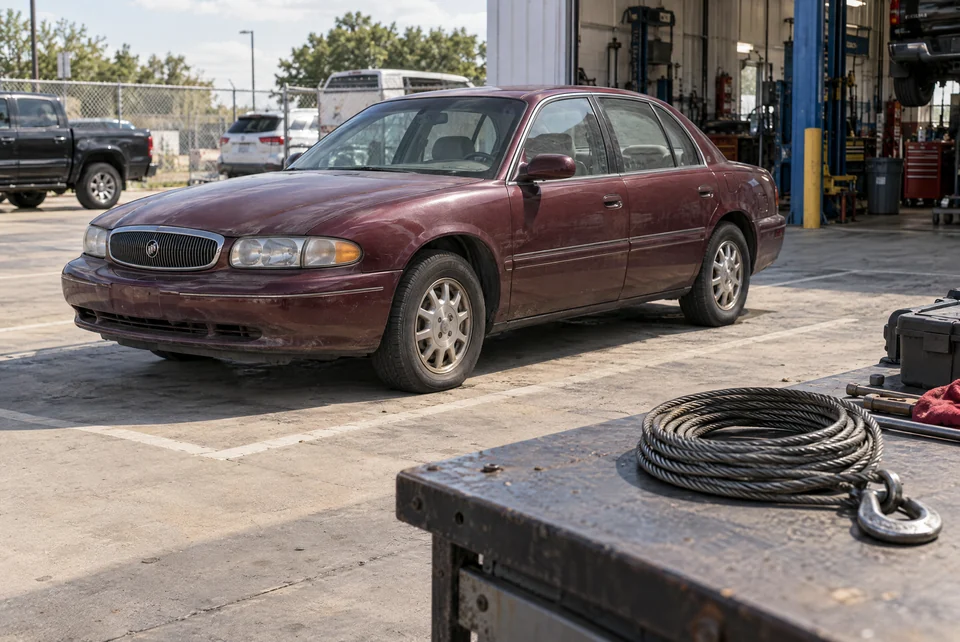
“It does not run” is a starting point, not a complete condition description. A flat battery, missing keys, locked wheels and collision damage can require very different handling. Give the coordinator enough information to determine whether a standard transport arrangement is suitable before a truck is assigned.
What to know first
- Describe rolling, steering and braking separately.
- Disclose leaks, loose parts and battery damage.
- Loading assistance must be agreed before pickup.
Explain what the car can and cannot do.
Can it roll freely? Can the steering be controlled? Do the brakes work? Are the keys available? Can the transmission be placed in the position needed for handling? These answers are more useful than one general condition label.
Do not guess if you are buying remotely. Ask the seller or yard to confirm the current condition. If something cannot be verified, mark it as unknown so the planner does not treat it as a confirmed capability.
Understand the preliminary non-running rate.
Driveline’s non-running estimate uses $10 per estimated mile through 300 miles or $3 per mile above 300, per vehicle. The chosen rate applies to the entire trip and takes priority over the running-vehicle transport rate.
This creates an intentional step: 300 miles calculates to $3,000; 301 miles calculates to $903. ZIP-center distance multiplied by 1.2 is only a planning estimate. Loading acceptance and the final quote are reviewed; modified vehicles receive a manual quote instead.
Describe the pickup surface and access.
A car on a flat paved area presents a different problem from one in a tight garage, on soft ground or blocked by other vehicles. Explain where the car is and whether equipment can reach it.
If a facility offers loading assistance, ask exactly what it provides and when it is available. Do not assume that help is included simply because the vehicle is at an auction or repair shop.
Disclose damage and hazards.
Report visible leaks, damaged suspension, missing wheels, unsecured body panels and other conditions that affect handling. A normal transport quote may not include recovery work or the equipment needed to move a badly damaged vehicle.
For electric or hybrid vehicles, disclose suspected high-voltage battery damage or other safety concerns before any arrangement is made. NHTSA warns that physical damage to the vehicle or battery can lead to delayed fire and advises recovery operators to follow vehicle-specific guidance. Standard vehicle transport is not automatically suitable for a damaged battery or hazardous condition.
Get the loading approach confirmed.
Winch access, tire skates, recovery equipment or on-site assistance may be relevant depending on the vehicle. Suitability must be assessed by the responsible operator using the actual conditions and manufacturer guidance.
The same question applies at the destination: how will the car be unloaded and where can it be placed? A plan that only addresses getting the vehicle onto a trailer is incomplete.
- Starts, rolls, steers and brakes: separate answers
- Keys and transmission access
- Tire, suspension and wheel condition
- Damage, leaks or loose components
- Pickup surface and available loading help
- Destination access and unloading arrangements
Update the plan if the condition changes.
A car can become harder to move while waiting for pickup. A battery may go flat, a tire may lose air or the yard may relocate it. Tell the coordinator about changes before arrival so the assigned equipment remains appropriate.
In Driveline’s form, select the non-running or special-handling condition and explain the details. A complete description makes the next conversation more useful and reduces the chance of a mismatched pickup.
Plan your next step
See Driveline’s published rates and mileage method ↗Calculate your preliminary car shipping price ↗Car transport without keys: what must be reviewed before dispatch ↗Shipping a project car: a complete condition brief for the transporter ↗Towing vs. auto transport: choose around condition, distance and access ↗Review a flood-exposed electric vehicle before transport ↗Sources & further reading
Explore the service
Non-running vehicle transport ↗Published by Driveline Logistics. Guides explain planning considerations; shipment-specific equipment, availability and written terms are confirmed before booking.