
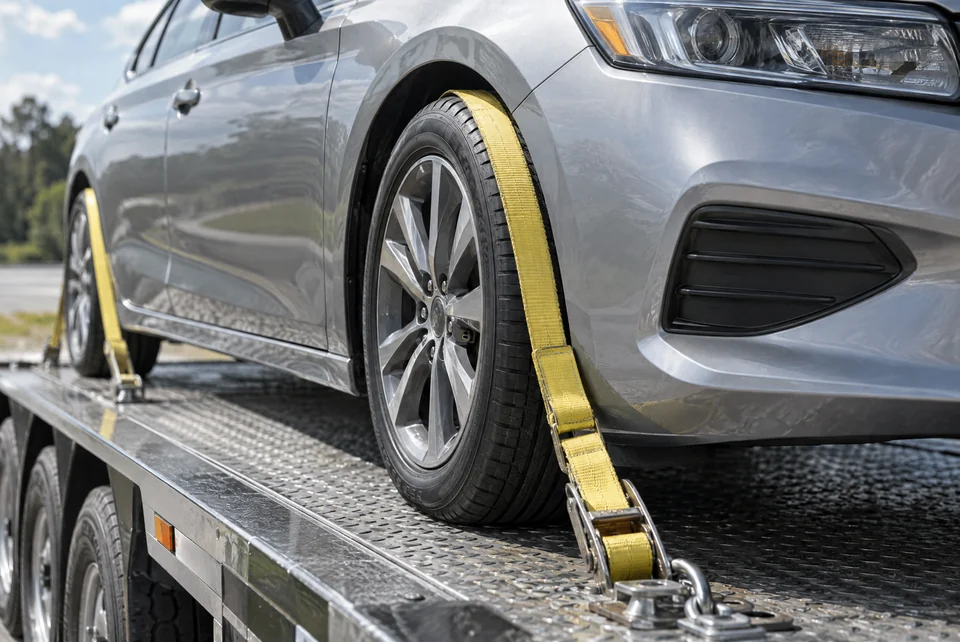
A close-up of a wheel strap shows only one part of a securement system. The vehicle, restraint equipment, anchor points and loading arrangement must work together. As an owner, your most useful contribution is a complete vehicle brief and clear questions about the proposed approach.
What to know first
- A photograph alone cannot prove a complete securement system is correct.
- Disclose sensitive wheels, modifications and clearance concerns.
- Follow vehicle and equipment instructions through qualified operators.
Describe the contact points.
Share aftermarket wheels, unusual tire sizes, delicate finishes, low bodywork and changes from factory specification. Tell the team if a component is already damaged or if the vehicle has a particular manufacturer transport instruction.
A standard model description can miss these details. Clear photographs and measurements help explain the concern, but suitability still needs review against the actual vehicle and equipment.
Ask about the complete system.
Discuss how the proposed restraints and anchors are suited to the car. The condition of the equipment and the way it is used matter alongside its appearance. Do not treat a colored strap or a branded trailer as evidence of a correct loading method.
FMCSA publishes cargo securement requirements, including provisions relevant to automobiles and light trucks. Those rules are a starting point for the responsible operator, alongside the applicable vehicle and equipment instructions. This article is not an installation procedure.
Keep clearance in the same conversation.
A securement plan begins after the vehicle can be loaded appropriately. Front overhang, wheelbase, breakover angle and the trailer approach all affect that earlier step. Ask about the actual loading method for a low or modified car.
Liftgates and extended ramps are equipment options, not universal solutions for every vehicle. Confirm compatibility using the car's real dimensions and the equipment being proposed.
Document, then let qualified people do the work.
Keep a useful record of the vehicle's visible condition before pickup and at delivery. If something about the loading arrangement concerns you, ask the responsible operator to explain it before proceeding.
Do not improvise a restraint change based on a marketing photo or a general guide. The goal is an appropriate, documented arrangement handled by people responsible for the equipment and operation.
- What vehicle-specific instructions apply?
- Does the loading method fit the actual clearance?
- How are sensitive contact points considered?
- Who can answer a concern during pickup?
Plan your next step
How to measure a vehicle for transport: height, width and clearance ↗Car transport with air suspension: record the approved loading setup ↗Porsche 911 transport: model-specific clearance and loading questions ↗Sources & further reading
Explore the service
Enclosed auto transport ↗Published by Driveline Logistics. Guides explain planning considerations; shipment-specific equipment, availability and written terms are confirmed before booking.